Gorilla Trekking in Uganda and Rwanda
Scroll for more Info
Experience the World’s Last Gentle Giants in Their Misty Forest Homes
Mountain gorilla trekking in Uganda and Rwanda is one of Africa’s most powerful and emotionally moving wildlife experiences. Standing just metres away from a wild mountain gorilla family in dense, mist-covered rainforest is not simply a safari activity — it is a profound encounter with one of humanity’s closest relatives and a direct connection to conservation in action.
This extraordinary experience takes place in Bwindi Impenetrable National Park and Mgahinga Gorilla National Park in Uganda, and Volcanoes National Park in Rwanda — the last remaining strongholds of the endangered mountain gorilla in the world.
Where to Go for Mountain Gorilla Trekking in Uganda and Rwanda
Mountain gorilla trekking in Uganda and Rwanda is limited to a small number of carefully protected national parks, ensuring both conservation success and meaningful visitor experiences.
In Uganda, Bwindi Impenetrable National Park is the most important gorilla trekking destination, home to nearly half of the world’s remaining mountain gorilla population. The park offers the highest number of habituated gorilla families and diverse trekking sectors, making it ideal for varied budgets and longer safaris. Mgahinga Gorilla National Park, located in the Virunga Mountains, provides a quieter, more scenic trekking experience with dramatic volcanic landscapes.
In Rwanda, Volcanoes National Park is renowned for its bamboo forests, iconic volcano backdrops, and excellent infrastructure. Its proximity to Kigali makes it the most accessible option for travellers seeking a short, high-end gorilla trekking safari.
Together, these parks form the core of global mountain gorilla conservation and offer the most ethical and rewarding gorilla trekking experiences in Africa.
Gorilla Trekking Experience
Step Into Their World
Successful gorilla trekking
Wild Compass Africa offers luxury safaris and unforgettable gorilla trekking adventures in the heart of Africa
Know The Mountain Gorillas
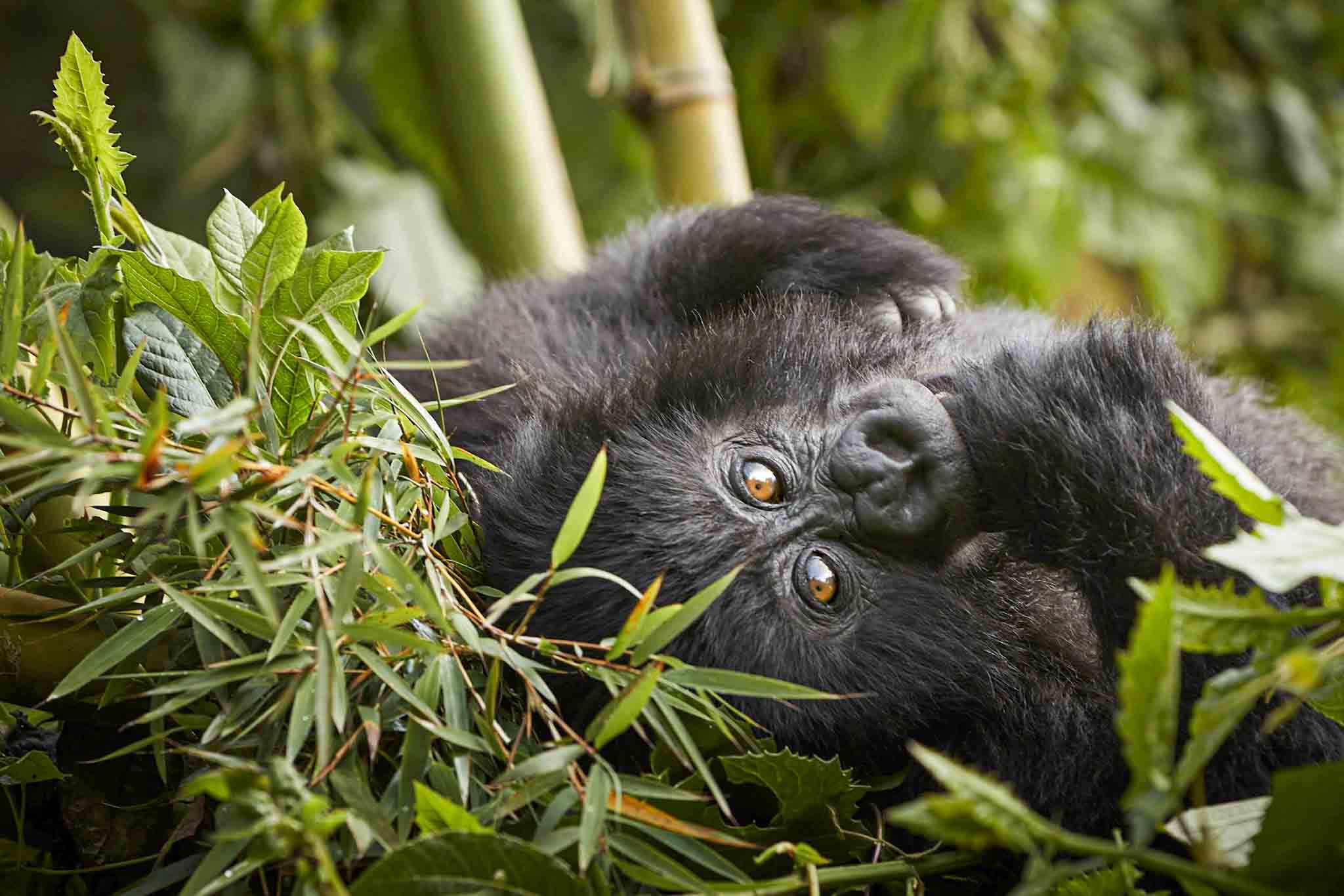
Mountain gorillas (Gorilla beringei beringei) are critically endangered great apes found only in Uganda, Rwanda, and the Democratic Republic of Congo. Unlike their lowland relatives, mountain gorillas inhabit high-altitude montane and bamboo forests, thriving in cool, misty environments between 2,200 and 4,300 metres above sea level.
They live in close-knit family groups led by a dominant silverback male, supported by females, juveniles, and infants. Their diet consists mainly of leaves, shoots, stems, bamboo, and seasonal fruits. Despite their immense size and strength, mountain gorillas are calm, intelligent, and deeply social animals.
Gorilla trekking permits directly fund conservation, veterinary care, anti-poaching patrols, and community development. Seeing gorillas in the wild is not only unforgettable — it is one of the most impactful forms of conservation tourism in Africa.
Physical Characteristics and Behaviour
Mountain gorillas are the largest living primates on Earth. Adult silverbacks can weigh up to 220 kg, while females average 90–180 kg. The iconic silver hair on the backs of mature males signals leadership and maturity within the group.
Daily gorilla life revolves around feeding, resting, grooming, and social interaction. Juveniles play energetically, climbing vegetation and wrestling with siblings, while mothers provide constant care to infants. Silverbacks maintain group cohesion, resolve conflicts, and protect the family from threats.
Communication occurs through vocalisations, facial expressions, gestures, and body language — including the famous chest-beating display. Mountain gorillas reproduce slowly, making each birth vital to the survival of the species.
Habitat: Where Mountain Gorillas Live
Mountain gorillas inhabit dense, high-altitude forests of Uganda and Rwanda, where mist drifts through bamboo groves, moss-covered trees, and tangled undergrowth. These forests are alive with birdcalls, the chatter of monkeys, and the subtle rustle of gorilla movement. Trekking through these habitats offers more than a glimpse of gorillas — it immerses you in their daily world, where silverbacks lead, mothers nurture infants, and juveniles play among ferns and vines.
For those on a habituation experience in Uganda, the encounter is even deeper: you may spend up to four hours observing the gorillas as they go about their routines, from feeding and grooming to social play. This extended time allows a rare window into gorilla behaviour, forest ecology, and the rhythms of a family group — an intimate, unforgettable connection that standard one-hour treks simply cannot offer.
Gorilla Habituation Experience (Uganda Only)
Uganda offers a unique gorilla habituation experience, where visitors can spend up to four hours with a gorilla family that is still adjusting to human presence. Unlike standard one-hour treks, this extended time allows a rare, in-depth view of gorilla behavior, family dynamics, and the rhythms of daily life in their natural habitat.
Locations: Rushaga & Nkuringo sectors, Bwindi Impenetrable National Park
Permit Cost: USD 1,500 per person
During the habituation experience, you may witness:
- Silverbacks leading and protecting the group
- Mothers nurturing infants and juveniles playing energetically
- Social interactions, grooming, and communication through gestures and vocalisations
This immersive opportunity is perfect for photographers, researchers, and travellers who want a deeper understanding of mountain gorillas and a more intimate connection with these gentle giants. The experience also supports conservation, as fees directly fund ongoing research, monitoring, and forest protection.
Mountain Gorilla Photography Safaris
Mountain gorillas offer extraordinary photographic opportunities in misty forests and dramatic volcanic landscapes.
Photography Tips
- Use fast lenses (100–400mm)
- Avoid flash
- Prepare for low light
- Respect distance and behaviour
Wild Compass Africa designs photography-focused itineraries that prioritise light, positioning, and ethical practices.
Best Time for Mountain Gorilla Trekking
Dry Seasons (Best)
- June–September
- December–February
Green Seasons
- March–May
- October–November
Dry months offer easier hiking; rainy months are greener, quieter, and excellent for photography.
Essential Rules and Trekking Requirements
- Minimum age: 15 years
- Good physical fitness is required
- No trekking when sick
- Masks and hygiene measures may apply
- Follow ranger instructions at all times
What to Pack for Gorilla Trekking
- Waterproof hiking boots
- Long trousers and sleeves
- Rain jacket
- Gloves and gaiters
- Camera and spare batteries
- Walking stick (provided at park)
- Hiring a porter is highly recommended
FAQ: Mountain Gorilla Trekking
Q: How long does a gorilla trek take? A: Treks can last 2–7 hours depending on terrain and gorilla location.
Q: Are gorilla trekking permits required? A: Yes, each visitor must have a permit. Prices vary: USD 800 in Uganda and USD 1,500 in Rwanda.
Q: Can I trek both Uganda and Rwanda in one safari? A: Absolutely. Many travellers combine both for a richer experience.
Q: Is gorilla trekking suitable for beginners? A: Moderate fitness is required due to uneven terrain, but beginners can trek with guidance.
Q: What wildlife can I see besides gorillas? A: Birdlife, monkeys, golden monkeys, and forest plant diversity are abundant in all parks.
Clients Reviews
4.9 Tripadvisor





Inspire - London
Experience in Uganda with Jaz Abaho
We were three Austrian couples and a Ugandan friend who spent 12 days traveling through Uganda with Jaz Abaho, the owner of Wild Compass Africa.
Written March 29, 2026


Destinations
Experiences
Follow us
Get Intouch
info@Wildcompassafrica.com
wildcompassafrica@gmail.com
+256 779 252 533 |WhatsApp
Contact your Travel Advisor